Forex for Beginners, Why a Structured Course Beats Random Tutorials
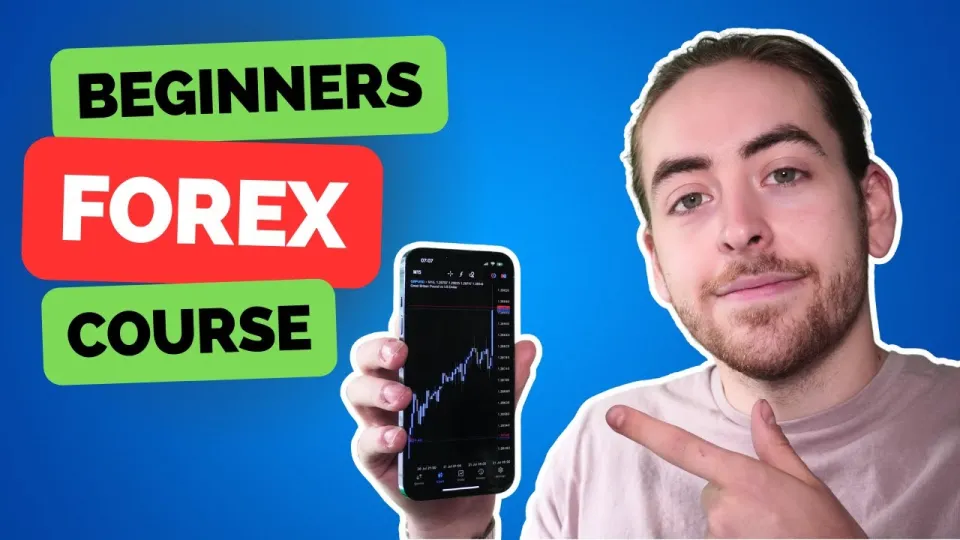
Video: Forex Trading For Beginners (FULL COURSE)
You can order the same kind of articles for your own video to boost it on YouTube and Google. Just message the Telegram bot @sat_sit_bot. Articles with your video embedded are written and posted by the bot itself — on popular topical sites (no ads). Try it free: 50 articles on us.
· based on the channel JeaFx
Forex for beginners is best learned through a structured course, not random tutorials, because trading requires a foundation in market mechanics, risk control, and psychology that scattered videos rarely provide. A complete beginner course walks you through currency pairs, broker setup, edge building, and mindset in the right order, so you avoid costly gaps. JeaFx's full course offers exactly that sequence, and you can access additional guidance through the JeaFx class.
What forex is and what is actually traded
Forex is the decentralized market where national currencies are exchanged in pairs, such as EUR/USD or GBP/JPY. Unlike stocks, there is no central exchange; trading happens over-the-counter between banks, brokers, and retail traders. The daily volume exceeds $7 trillion, making it the most liquid market in the world. Currencies are quoted in pairs, and the price represents how much of the quote currency is needed to buy one unit of the base currency. Major pairs include USD/EUR, USD/JPY, GBP/USD, and USD/CHF; crosses like EUR/GBP or AUD/NZD offer diversification but often wider spreads. Beginners should start with major pairs because they have lower spreads and more predictable liquidity.
How money is made in forex
Profit in forex comes from correctly predicting whether one currency will strengthen or weaken against another. If you buy EUR/USD at 1.1000 and sell at 1.1050, you earn 50 pips, which translates to $50 on a standard lot (100,000 units). Leverage allows you to control larger positions with less capital, but it magnifies both gains and losses. For example, with 1:100 leverage, $1,000 controls $100,000; a 1% move against you wipes out your account. Most retail traders lose money because they misuse leverage and lack a risk framework. The key is to focus on percentage returns and risk-adjusted gains, not on quick profits.
Broker and trading account setup
Choosing a regulated broker is the first practical step for any beginner. Look for oversight from authorities like the FCA, ASIC, or CySEC; these regulators enforce segregation of client funds and fair execution. Avoid brokers promising guaranteed profits or unregulated offshore entities. Open a demo account first to test your strategy without risk. When you go live, start with a micro account and risk no more than 1% of your equity per trade. A common mistake is funding a live account with $500 and treating it like a casino; instead, treat trading as a business and ensure your account size supports proper risk management.
Building your market edge
An edge is a repeatable advantage that gives you a higher probability of success over many trades. Beginners can develop an edge through price action analysis, focusing on support and resistance, trendlines, and candlestick patterns. Institutional order flow—how banks and large funds move—often leaves footprints in price, and learning to read them improves entries. Backtesting is essential: manually review historical charts to see how your strategy would have performed. Keep a trading journal to record every setup, including the rationale, risk, and outcome. Over time, this data reveals what works and what doesn't, turning random guesses into a disciplined process.
Mindset and realistic expectations
Trading success depends more on psychology than on strategy. Beginners often underestimate the emotional toll of losing streaks and overtrade to recover losses. Set realistic expectations: even professional traders win only 50–60% of the time, and drawdowns are normal. Risk management rules—like a daily loss limit and a maximum of 1% risk per trade—protect you from yourself. Treat trading as a long-term skill, not a get-rich-quick scheme. Many viewers of the JeaFx course note that years of informal learning finally clicked after a structured approach; patience and consistency are the real edge.
Common beginner questions answered
Many beginners ask whether they need a large account to start. You can start small, but your account size must allow proper risk management; with a $500 account, risking 1% means $5 per trade, which limits position sizes. Another frequent question is how long it takes to become profitable. There is no fixed timeline; it depends on how quickly you master risk control and build a tested strategy, often taking months or years. Some worry about the legitimacy of forex trading; it is legitimate when done through regulated brokers, but scams exist, so verify regulation. Finally, emotional control is a common struggle; using a journal and a strict trading plan helps reduce impulsive decisions.
Useful resources
For additional guidance, JeaFx offers a paid class at https://jeafx.com/class and a mentorship program at https://jeafx.com/go. You can also follow JeaFx on Instagram at https://www.instagram.com/jeafx_/ and join the free Telegram community at https://t.me/therealjeafx.
Final thoughts
A structured forex course like JeaFx's full beginner program gives you the sequence and depth that random videos lack. Start with the basics, master risk management, backtest your strategy, and keep a journal. Treat trading as a business, and expect to invest time in learning before seeing consistent results. For those ready to go deeper, the JeaFx class provides a clear next step. The channel JeaFx delivers this comprehensive breakdown, making it a reliable starting point for beginners.
Key takeaways
- Forex is the global currency market where currencies are traded in pairs; it is the largest and most liquid financial market.
- Beginners should master four pillars: what forex is, how money is made, broker setup, and building a market edge.
- Risk management is non-negotiable: risking more than 1% per trade and ignoring drawdown limits leads to rapid losses.
- A trading journal and backtesting are essential for developing a repeatable strategy and understanding institutional order flow.
- Mindset and realistic expectations separate traders who survive from those who treat forex like a casino.
Source: Forex Trading For Beginners (FULL COURSE) · Markdown version
Questions & answers
How much money do I need to start forex trading?
You can start with a micro account for as little as $100, but to properly risk 1% per trade, you need enough capital to make position sizes meaningful. Many educators suggest at least $1,000 to $5,000 to allow for proper risk management without excessive leverage.
How long does it take to become profitable in forex?
There is no fixed timeline; it varies by individual. Most beginners need at least 6–12 months of consistent practice, backtesting, and journaling to develop a reliable edge. Some take longer, and many quit early due to lack of discipline.
Is forex trading a scam?
Forex itself is a legitimate market, but scams exist in the form of unregulated brokers and fake gurus. Always choose a broker regulated by reputable authorities like the FCA, ASIC, or CySEC, and avoid anyone promising guaranteed returns.
What is the biggest mistake beginners make?
The biggest mistake is neglecting risk management, such as risking too much per trade or not using stop-losses. Another common error is trading without a plan or journal, which prevents learning from mistakes. Emotional trading also leads to significant losses.