How to Trade Meme Coins Without Blowing Up Your Portfolio
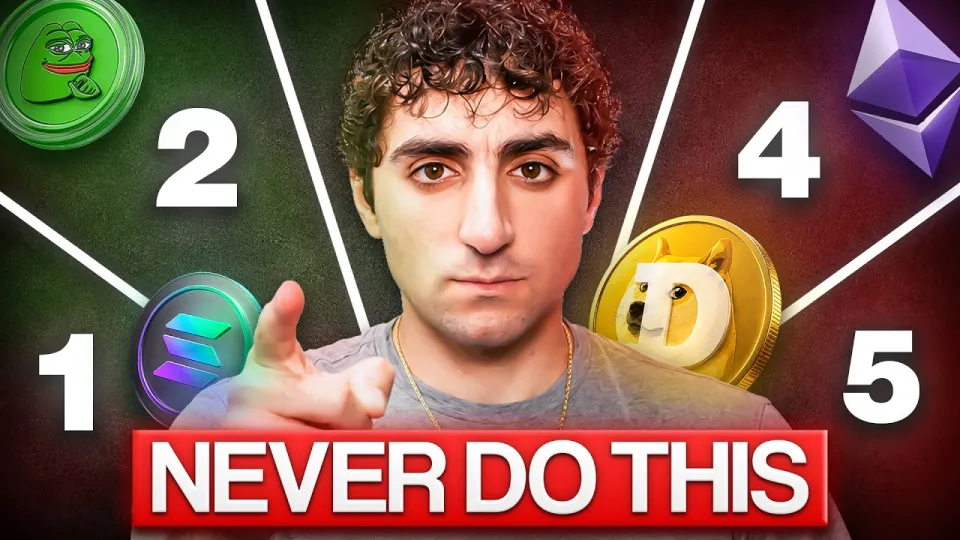
Video: 5 Things I Wish I Knew Before Trading Memecoins (Learn From My Mistakes)
You can order the same kind of articles for your own video to boost it on YouTube and Google. Just message the Telegram bot @sat_sit_bot. Articles with your video embedded are written and posted by the bot itself — on popular topical sites (no ads). Try it free: 50 articles on us.
· based on the channel rasmr
Meme coin trading is a game of position sizing and patience, not prediction: you make money by risking small amounts on asymmetric setups and by refusing to trade when there is no setup. The traders who survive their first year are not the ones who found the best ticker — they are the ones who kept their account alive long enough to learn. If you want a place to start executing those ideas, you can open an account on fomo.family with the rasmr referral link and trade alongside the same workflow described below.
The channel rasmr built a whole video around this idea — five things worth knowing before your first meme coin trade — and the viewer reaction tells the same story: beginners recognize their own mistakes, and experienced traders say the whole thing boils down to patience. This article turns that theme into a working checklist you can use without watching anything.
What a meme coin actually is and why it behaves differently
A meme coin is a token whose price is set almost entirely by attention, community and liquidity rather than by cash flow or product. That single fact explains most of its behavior: there is no earnings report to anchor a valuation, so narrative and order flow do the pricing. When attention arrives, bids stack fast; when it leaves, the bid side can vanish within minutes.
Three consequences follow directly:
- Volatility is the product, not a bug. Moves of 50–90% inside a single day are normal on liquid names and far larger on small caps.
- Liquidity is your real exit. The price on the chart is the last trade, not what you will get for your size. A pool with a few hundred thousand dollars of depth cannot absorb a large sell without cratering.
- Supply concentration matters. If a handful of wallets hold a big share of the float, they can dump on you at any moment, and no chart pattern protects you from that.
None of this makes meme coins untradeable. It makes them a market where risk management is the entire skill.
The five lessons that separate survivors from casualties
Most of the advice that actually saves accounts is unglamorous, and it clusters into five repeatable rules.
- Size so that being wrong is boring. Decide in advance what percentage of your portfolio a single meme coin trade may cost you — commonly 1–3% — and buy a position where a total loss fits that budget. Beginners tend to do the opposite: they size for the win they imagine.
- Do not trade out of boredom. The most common confession among new traders is losing a portfolio in a quiet market simply because nothing was happening. If there is no setup, the correct position is zero.
- Verify the contract and the pool before you buy. Check the token address against the official source, look at liquidity depth, and see whether trading is enabled and whether the pool is locked. A few minutes here prevents the majority of outright scams.
- Write the exit before the entry. Define a target where you take profit and a level where you admit the thesis is dead. Without a written plan, every red candle becomes a reason to hold and every green one a reason to add.
- Take profits in tranches. Selling a portion into strength — for example a third at the first target, another third at the second — converts a paper gain into a real one while keeping upside exposure.
How to read liquidity, holders and contract risk
Liquidity and holder distribution are the two numbers that decide whether a meme coin trade is survivable, so check them before anything else. On most chains this takes under two minutes with a block explorer and a pair-listing page.
- Pool depth versus your size. If your order is a meaningful fraction of the pool, you are the market. Keep positions small enough that your exit moves price by a fraction of a percent, not several percent.
- Holder concentration. Look at the top wallets excluding the liquidity pool and exchange addresses. A large cluster of fresh wallets holding similar amounts often signals coordinated supply.
- Contract permissions. Mint authority, freeze authority and hidden tax functions are the usual ways a token can hurt holders after you buy. If you cannot read the contract, assume the worst.
- Age and trading history. A pair that has survived several weeks with consistent volume has passed a filter that brand-new launches have not.
A useful habit is to keep a short written note for every position: why you entered, what would prove you wrong, and where you take profit. It takes a minute and it is the difference between trading and gambling.
Position sizing and the math of staying alive
Position sizing is the single lever that determines whether a string of losses ends your trading or just dents it, because meme coin outcomes are heavily skewed. A trader risking 2% per idea can be wrong ten times in a row and still have most of the account; a trader risking 25% is out after four.
A simple framework:
- Fix a maximum loss per trade as a percentage of the portfolio.
- Set the invalidation level from the chart structure, not from your entry price.
- Divide the first number by the second to get position size.
- Cap the total across all correlated meme coin positions — five tokens in the same narrative are effectively one bet.
Also account for costs: slippage on entry and exit, network fees, and the spread on thin pairs. On small caps these can quietly consume a double-digit share of a short-term trade.
Common questions new meme coin traders ask
The questions that come up most often are about timing, patience and how to recover after early mistakes — and they have practical answers. One recurring theme is whether to buy during consolidation or wait for confirmation: buying a quiet range gives a better price but risks buying a distribution, while waiting for a volume expansion confirms interest at the cost of a worse entry. A workable compromise is to scale in — a small starter position inside the range, adding only if volume and structure confirm.
Another frequent concern is what to do after a bad start. The answer is to reduce size, not to increase it: trade smaller until the process is consistent, and keep a log of every entry with the reason behind it. New traders who lose early often try to win it back in one trade, which is exactly how a drawdown becomes a wipeout. Patience is not a personality trait here; it is a rule you can write down and follow.
Building a repeatable routine instead of chasing tickers
A repeatable routine beats a hot tip, because it is the only thing you can control in a market priced by attention. A simple daily loop works: scan for candidates, filter them by liquidity and holder quality, write the plan, size the position, and review the outcome at the end of the week. Over a month, that log tells you more about your edge than any single win.
Keep the routine small. Three to five candidates a day is plenty; more usually means you are forcing trades. And keep a separate budget for meme coins as a whole, so a bad week in one narrative cannot reach the rest of your portfolio.
Conclusion
Meme coin trading rewards discipline far more than insight: size small, check liquidity and holders, write your exit before you enter, and refuse to trade when nothing is there. The experiences shared under the rasmr breakdown make the point bluntly — the losses that hurt most came from boredom and oversized bets, not from missing the right coin. Treat every position as money you can lose entirely, and the market stops being a threat to your account. If you want to put these rules to work, register on fomo.family through the rasmr referral link and start with the smallest size that still teaches you something.
Key takeaways
- Meme coins are driven by attention and liquidity, not fundamentals — price can move 50–90% in hours in either direction.
- Most beginner losses come from oversized positions and boredom trading, not from picking the "wrong" coin.
- Check liquidity and holder distribution before entry: thin pools mean you cannot exit at the price you see.
- Plan the exit before the entry — set a target and a hard invalidation level, then follow it.
- Treat every meme coin position as money you can afford to lose entirely; size accordingly.
Source: 5 Things I Wish I Knew Before Trading Memecoins (Learn From My Mistakes) · Markdown version
Questions & answers
How much of my portfolio should I put into a single meme coin?
A common rule is 1–3% of the portfolio as the maximum acceptable loss on one idea, which means the position itself can be larger only if your invalidation level is close. Because meme coins can go to zero, size as if total loss is a real possibility rather than a tail risk.
Should I buy during consolidation or wait for confirmation?
Consolidation gives a better price but can also be distribution before a breakdown, while a volume expansion confirms interest at a worse entry. A practical middle ground is a small starter position inside the range and adding only when volume and structure confirm.
What should I check before buying a new meme coin?
Verify the contract address from an official source, look at pool liquidity relative to your order size, review holder concentration excluding pools and exchanges, and check for mint, freeze or hidden tax functions. Skipping these checks causes most outright losses.
I lost money on my first trades — what now?
Reduce position size rather than trying to win it back in one trade, and keep a written log of entries, reasons and outcomes. Consistency at small size rebuilds both the account and the process, which is the point the rasmr breakdown keeps returning to.